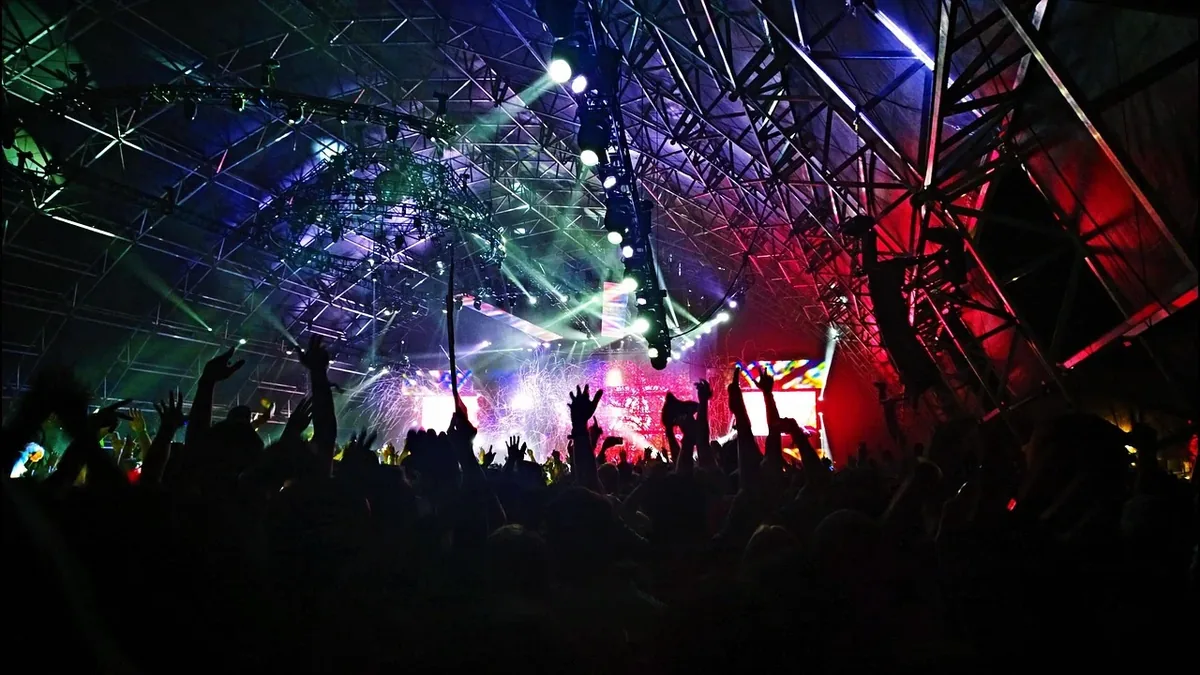
Sound System, Jungle And Garage Scenes
| Brand | Sound System, Jungle And Garage Scenes |
|---|---|
| First created | 1990s |
| Original use | Promoting and selling UK underground dance music events and merchandise |
| Country of origin | United Kingdom |
| Associated genres | Jungle, UK garage, drum and bass |
| Event type | Club night and festival |
| Founder | Darren "Daze" Hobbs |
Origin and history
Sound System culture originated in Jamaica in the mid-20th century, specifically during the 1950s. It began as a mobile discotheque centered around a powerful amplifier and speaker setup, playing recorded music for public dances. The culture was pioneered by figures such as Tom the Great Sebastian and later Duke Reid and Coxsone Dodd, who competed for audience loyalty through exclusive records and superior sound quality. This foundational Jamaican sound system model was directly transplanted to the United Kingdom with post-war Caribbean migration, particularly to cities like London and Birmingham. In the UK, the sound system became the essential social and musical hub for displaced communities, evolving through the 1970s and 1980s. The cultural and technological template of the Jamaican sound system provided the direct physical and social infrastructure from which the later UK-born genres of Jungle and UK Garage would emerge.
What it is for
A sound system is fundamentally a mobile, community-oriented sound reproduction rig designed for playing music at high volume and fidelity for collective listening. Its primary purpose is to host dances, or "blues," providing a vital social space and a platform for selectors (DJs) and MCs to perform. In its original Jamaican context and its UK transplantation, it served as a crucial cultural institution for marginalized communities, offering entertainment and a sense of identity. The competitive nature of different sound systems, each with their own exclusive "dubplates" (special one-off recordings), drove musical innovation and created intense local followings. For the Jungle and Garage scenes that grew from this foundation, the sound system provided the essential live environment where the complex, bass-heavy rhythms of Jungle and the sped-up, soulful grooves of Garage could be properly experienced. The physical sound system itself, with its emphasis on sub-bass frequency response, directly shaped the production aesthetics of these genres, as music was made specifically to be tested on these rigs.
Overview
The sound system, as a cultural entity, encompasses the equipment, the crew, and the event itself, forming the core ecosystem for Jamaican music and its UK derivatives. A typical system consists of custom-built speaker stacks, often with large bass bins, powerful amplifiers, and a turntable setup, all managed by a crew including the selector, the MC, and the audio engineers. In the UK, this model gave rise to entire party networks, with legendary systems like Sir Coxsone Outernational, Jah Shaka, and Unity Sound carrying the roots tradition forward. During the early 1990s, the UK's hardcore rave scene fragmented, with the darker, breakbeat-driven side coalescing into Jungle, which was deeply tied to sound system culture and pirate radio. Concurrently, a more soulful, house-influenced offshoot developed into UK Garage by the mid-1990s, also relying on sound system events and pirate radio for its dissemination. Both Jungle and Garage scenes maintained the sound system's core tenets: a focus on exclusive music, live MC performance, and the paramount importance of bass weight and sound quality in a communal dance setting.
What to know
The sound system event is not a passive concert but an interactive ritual where the crowd's energy and the selector's choices create a unique, unrepeatable experience. Exclusive, often unreleased tracks known as "dubplates" or "specials" are a currency of status, used by selectors to assert dominance over rival systems. Pirate radio stations were, and in some cases remain, the lifeblood of the Jungle and Garage scenes, providing a testing ground for new music and a direct link to the sound system parties. The musical structure of Jungle is characterized by complex, sped-up breakbeats (most famously the Amen break), sub-bass lines, and ragga or soul vocal samples, all engineered for maximum impact on a large sound system. UK Garage is distinguished by its skipping, shuffled 4x4 or 2-step rhythms, soulful vocal hooks, and a generally more polished production aesthetic compared to Jungle's raw edge. Understanding the lineage from Jamaican sound system to UK rave, and then to Jungle and Garage, is essential to grasping the social and sonic motivations behind these genres, which are as much about community and resistance as they are about music.
Common questions
A common question is whether Jungle and Drum & Bass are the same thing; Jungle is generally considered the earlier, ragga-influenced phase of the breakbeat hardcore continuum that solidified in the early 1990s, while Drum & Bass became the more streamlined, tech-focused term for the genre later in the decade. People often ask what the difference is between UK Garage and US Garage; UK Garage evolved from US house and garage but is distinctly faster, more rhythmically syncopated, and infused with UK sound system culture, whereas the US original is a deeper, slower house subgenre. Many wonder why pirate radio was so crucial; it provided an unregulated platform free from mainstream commercial constraints, allowing DJs to play the latest dubplates and build direct, localized audiences for their sound system events. A frequent point of confusion is the term "2-step," which refers to a specific Garage rhythm pattern that omits the kick drum from every other beat, creating a distinctive, skipping feel central to the genre's late-1990s sound. Others inquire about the role of the MC, which in these scenes extends from the Jamaican tradition of "toasting," providing lyrical commentary, crowd hyping, and a continuous vocal presence integral to the live performance. Visitors to events often question the extreme volume and bass focus, which is a deliberate feature designed for physical, visceral immersion in the music, connecting directly to the sound system's roots in outdoor Jamaican dancehall culture.
Pros and cons
A significant advantage of the sound system culture is its creation of powerful, inclusive communities centered around music, often providing a sense of belonging and identity. The focus on exclusive music and live performance ensures a unique, non-commercialized experience that cannot be replicated by mainstream club nights. The sheer physicality of the sound, particularly the sub-bass, offers a profoundly immersive listening experience that home audio cannot match. However, a major drawback is the potential for sound quality issues if a system is poorly tuned or too powerful for a space, leading to distorted, painful audio that ruins the event. The scene's reliance on underground networks and word-of-mouth for event information can be a barrier to newcomers, making it seem exclusive or difficult to access. A common mistake is for promoters to prioritize sheer volume over clarity and balance, resulting in ear fatigue and driving away attendees who seek musical detail as well as power. Some participants regret the occasional insularity of the scenes, where familiarity and access to exclusive music can create cliques, and the intense competition between sounds can sometimes spill over into conflict.
Who it suits
The sound system culture and the Jungle and Garage scenes that emerged from it suit individuals who prioritize physical, communal music experience over passive, individual listening. They are ideal for those interested in the history and technology of sound reproduction, who appreciate the craft behind building a powerful and clear audio rig. The scenes particularly resonate with people who value musical discovery and exclusivity, seeking out rare tracks and live performances rather than commercially available playlists. They suit attendees who enjoy the interactive dynamic of a dance where the selector responds to the crowd and the MC acts as a guide, rather than a pre-programmed DJ set. These environments are well-matched for those with an affinity for bass-heavy music and complex rhythms, who understand that the full impact of Jungle or Garage is only felt on a large, capable system. Finally, they are for participants who appreciate cultural continuity, connecting the dots from Jamaican roots through to contemporary UK electronic music, and who see the dance as a form of cultural expression and resilience.