Department Stores
| Brand | Department Stores |
|---|---|
| Country of origin | United States |
| First created | 19th century |
| Original use | Retail store selling a wide variety of goods |
| Typical product range | Apparel, home goods, cosmetics, accessories |
| Typical store format | Multi-floor building in urban or suburban location |
| Common departments | Organized by product category (e.g., menswear, homeware) |
Origin and history
The concept of the department store originated in Europe during the mid-19th century. Its development is closely tied to the Industrial Revolution and the growth of urban consumer culture. The model is widely credited to France, with establishments like Le Bon Marché in Paris pioneering the format in the 1850s. The innovation quickly spread to other regions, including the United Kingdom and the United States, by the late 19th century. These stores consolidated a wide array of goods, previously sold in separate specialist shops, under a single roof. The architectural scale and operational model of these early stores fundamentally reshaped retail and social life in cities.
What it is for
A department store serves as a large-scale retail establishment offering a wide range of consumer goods divided into categorized sections or "departments." Its primary function is to provide comprehensive shopping convenience by housing diverse product lines, from clothing and cosmetics to home furnishings and electronics, in one location. Beyond mere retail, traditional department stores often aimed to provide a full-service experience, including personal shopping assistance, alterations, and gift wrapping. They also frequently housed amenities like restaurants, cafes, and beauty salons to extend customer dwell time. The format is designed to cater to broad demographic segments under one brand umbrella. Fundamentally, it acts as a curated marketplace, managing inventory and presentation across multiple distinct merchandise categories.
Overview
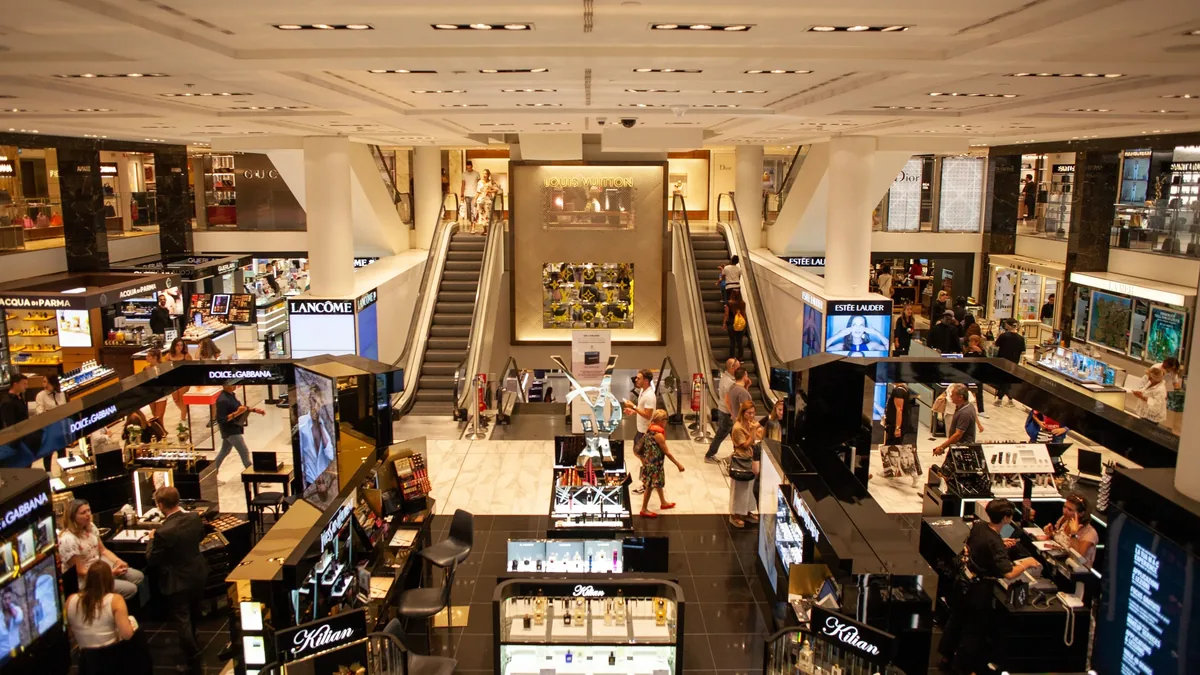
A department store is characterized by its multi-floor layout, each floor typically dedicated to a major category such as menswear, womenswear, home goods, or children's products. Operations are centrally managed, with buying, merchandising, and marketing handled for the entire store, though individual departments may have specialized staff. The business model historically relied on high inventory turnover, seasonal promotions, and brand prestige to drive sales. Many major department store chains developed private-label brands to offer exclusive merchandise and improve profit margins. In the late 20th and early 21st centuries, the traditional model faced significant challenges from specialty retailers, big-box stores, and e-commerce. The contemporary landscape includes a spectrum from luxury flagship stores to discount-oriented department store chains.
What to know
Department stores have historically been anchor tenants in shopping malls, driving foot traffic for the entire retail complex. The shift to online shopping has forced most traditional department stores to develop omnichannel strategies, integrating physical and digital sales channels. Store credit cards and loyalty programs have been a cornerstone of their customer relationship and financing strategies for decades. The concept of seasonal sales events, such as holiday sales or clearance events, was heavily popularized by department store marketing. Inventory management is complex due to the vast number of stock-keeping units (SKUs) across disparate product types. The decline of certain department store chains has often been attributed to failure to adapt to changing consumer habits, over-expansion, and high fixed costs for large physical spaces.
Common questions
What is the difference between a department store and a big-box store? Department stores typically offer a wider variety of branded goods across softlines (apparel) and hardlines (goods), often with a focus on service, whereas big-box stores focus on high-volume, low-cost sales of a more limited range of merchandise. How do department stores decide what brands to carry? Buyers for each department select brands and products based on trends, target customer demographics, historical sales data, and brand prestige. Why are many department stores struggling? Common challenges include high operational costs for large physical spaces, competition from online retailers and niche brands, and sometimes a perceived lack of differentiation or relevance. Do department stores own the brands they sell? They sell a mix of third-party national brands and their own private-label or exclusive brands, which they do own. What does "on the drop" mean in a retail context? A "drop" refers to a limited-release launch of a new product or collaboration, often creating urgency and exclusivity. How can I find out if a drop sold out? Information on sell-outs is typically confirmed by the retailer through official channels like website inventory status, social media announcements, or customer service.
Pros and cons
A primary advantage is the convenience of finding a vast array of products and services in one location, simplifying comparison shopping and errands. The environment often includes customer service amenities like gift wrapping, personal shopping, and easy returns that discount retailers may not provide. A significant con is that pricing is frequently not competitive compared to specialty online retailers or discount chains, especially on non-sale items. The broad inventory can also lead to a lack of deep expertise in any single product category, unlike a specialty store. Common mistakes include customers assuming consistent quality across all private-label goods or overlooking final sale terms during major clearance events. Many shoppers regret choosing a department store for technical or highly specialized purchases where expert advice is crucial, as staff training can be inconsistent.
Who it suits
This retail format suits shoppers who prioritize convenience and variety over hunting for the absolute lowest price on a specific item. It appeals to consumers who value the tactile experience of shopping and the ability to see, touch, and try on a wide range of goods immediately. The model traditionally suits gift shoppers seeking a one-stop destination with wrapping services and a broad selection of options. It also caters to customers who prefer a curated selection of mid-range to luxury brands assembled by professional buyers. Shoppers loyal to a store's specific private-label lines or who heavily utilize store credit card rewards are also a core demographic. However, it is less suited for price-sensitive buyers, those seeking highly specialized or niche products, or shoppers who prefer a streamlined, efficient purchasing process without navigating a large, complex store.